Geotechnical Consultations

State-of-the-art Finite Element Analysis in Geotechnical Engineering

Ur-GeoTech is committed to providing cost-effective, value engineering and the highest professional consulting services in the field of Finite Element Method applications in Geotechnical Engineering.

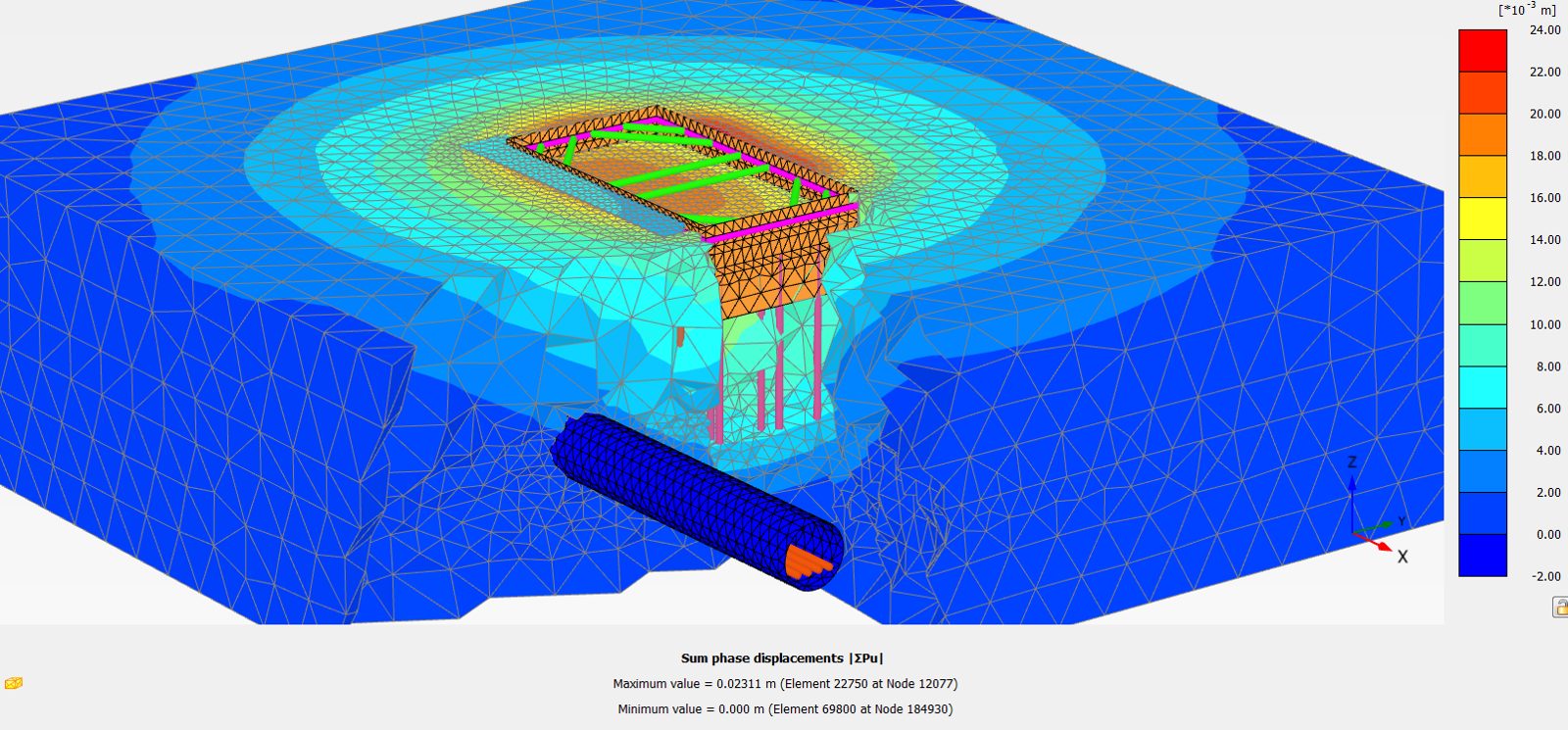
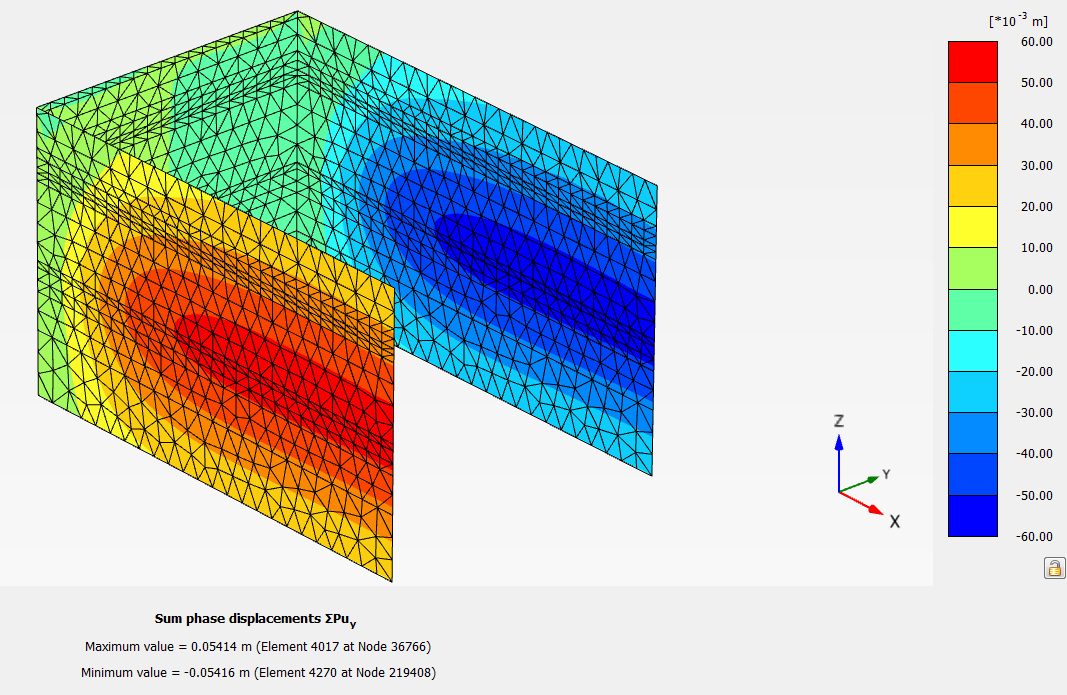
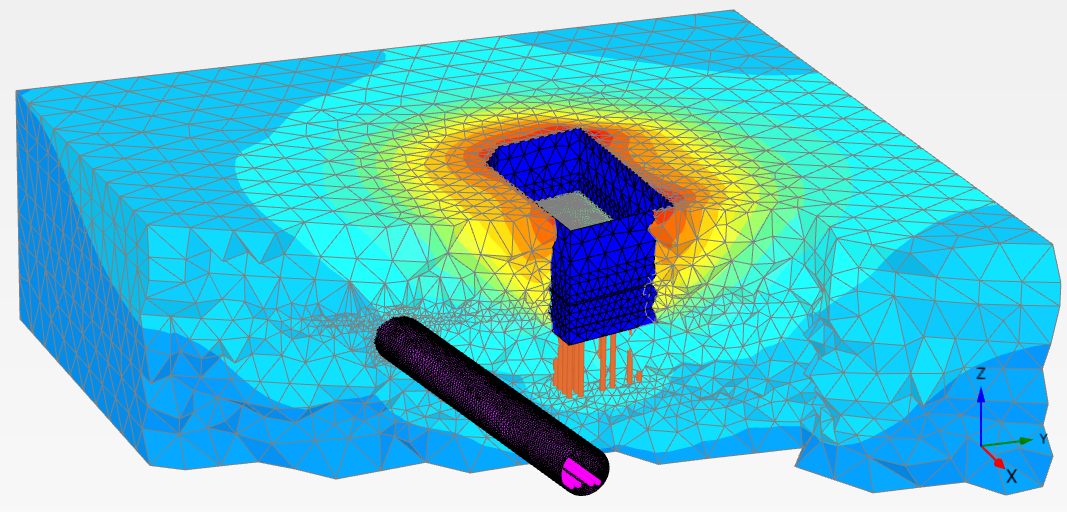
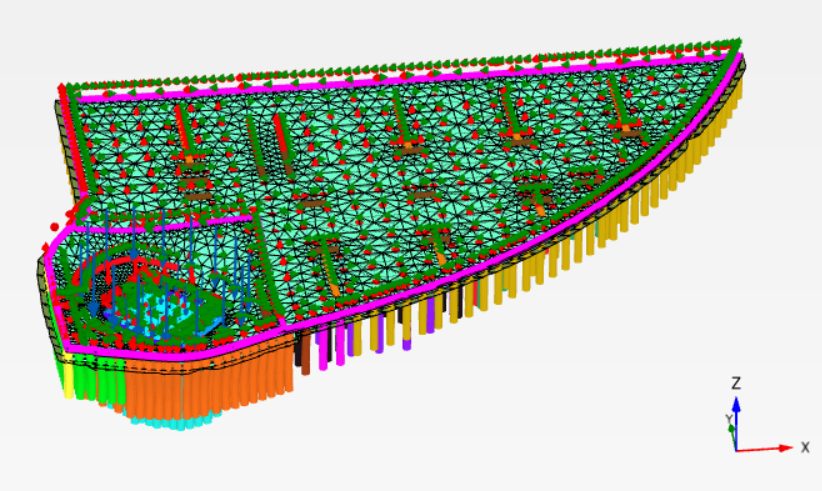
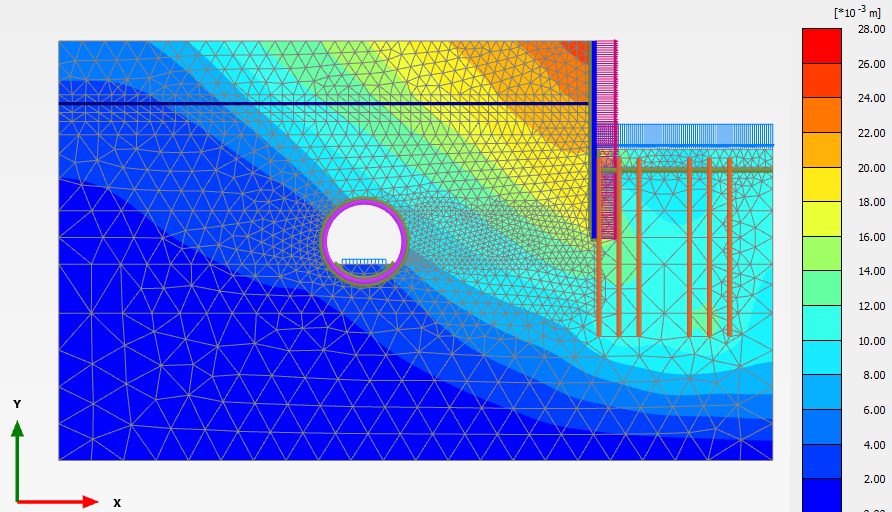
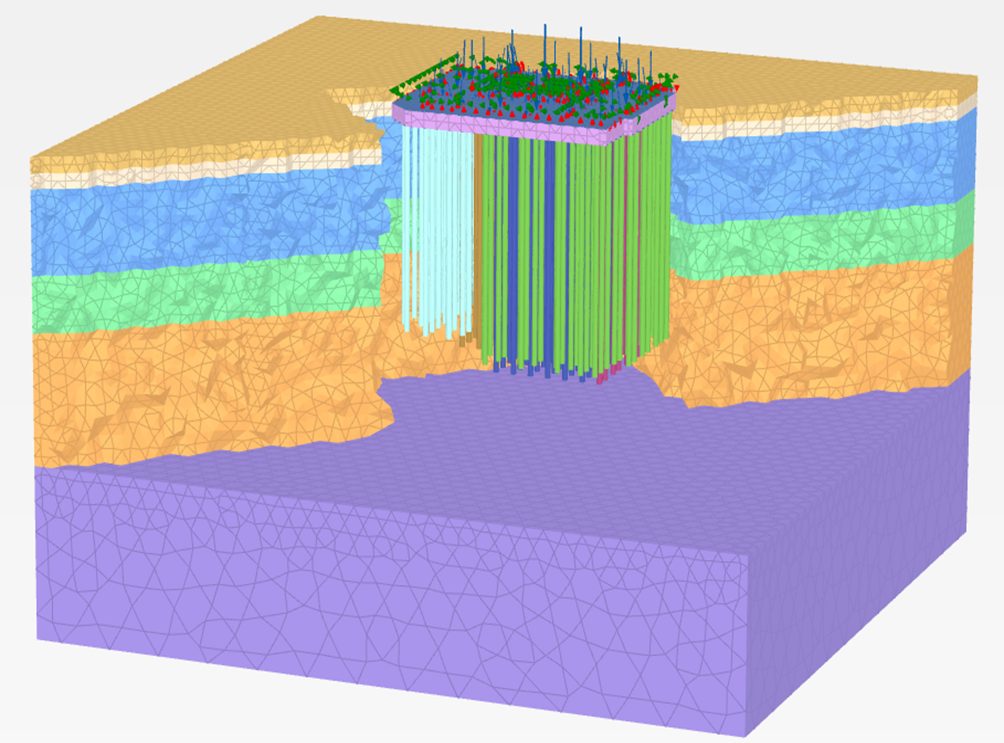
3D finite element model showing ground displacement contours around a deep excavation and tunnel
Finite Element expertise2D & 3D models of complex soil-structure interaction
Value engineeringAvoiding overly-conservative, costly designs
World-class projectsMetros, tunnels and mega infrastructure worldwide
35+Years in geotechnical & tunnel engineering
4Regions: Europe, UK, Middle East & Australia
12Specialist design analysis services
2D·3DAdvanced Finite Element modelling
Experience & Academic Excellence

Technical support that helps clients achieve their goals

Our experience and academic qualifications enable us to technically support our clients in achieving their goals. We have more than 35 years of experience in the field of geotechnical and tunnel engineering, leading design teams providing world-class solutions for challenging and prestigious projects in Europe, the United Kingdom, the Middle East and Australia.

We provide our expertise to enhance the technical capability of our clients' geotechnical design teams, ensuring useful finite element analysis for complex geotechnical problems.

“Our fundamental business strategy is building long-term client relationships.”
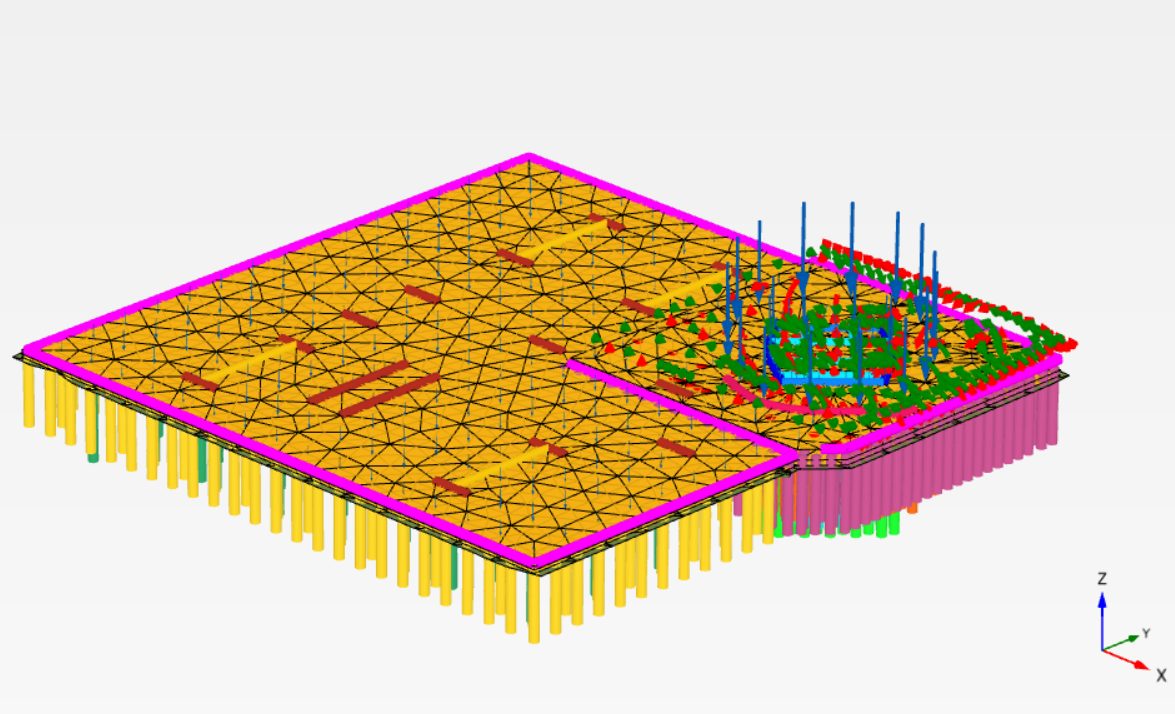
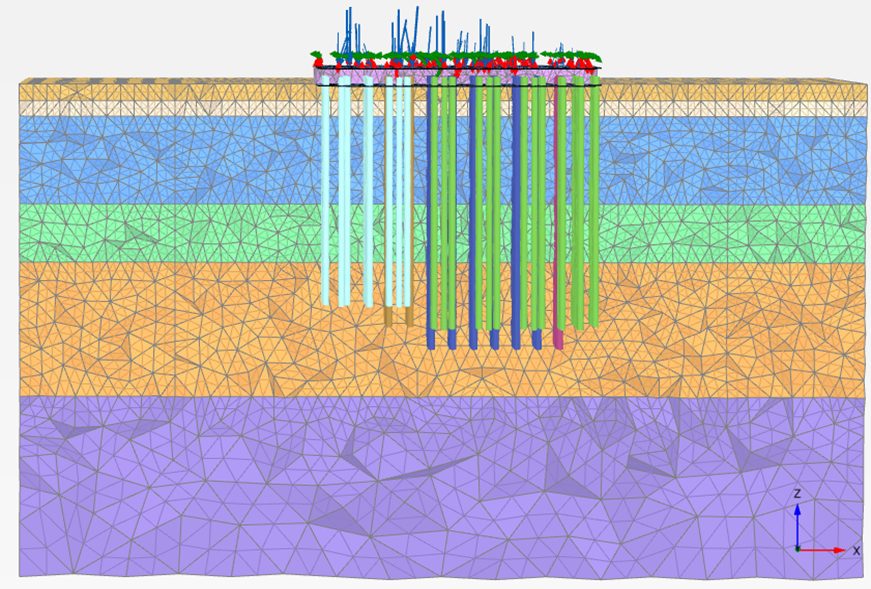
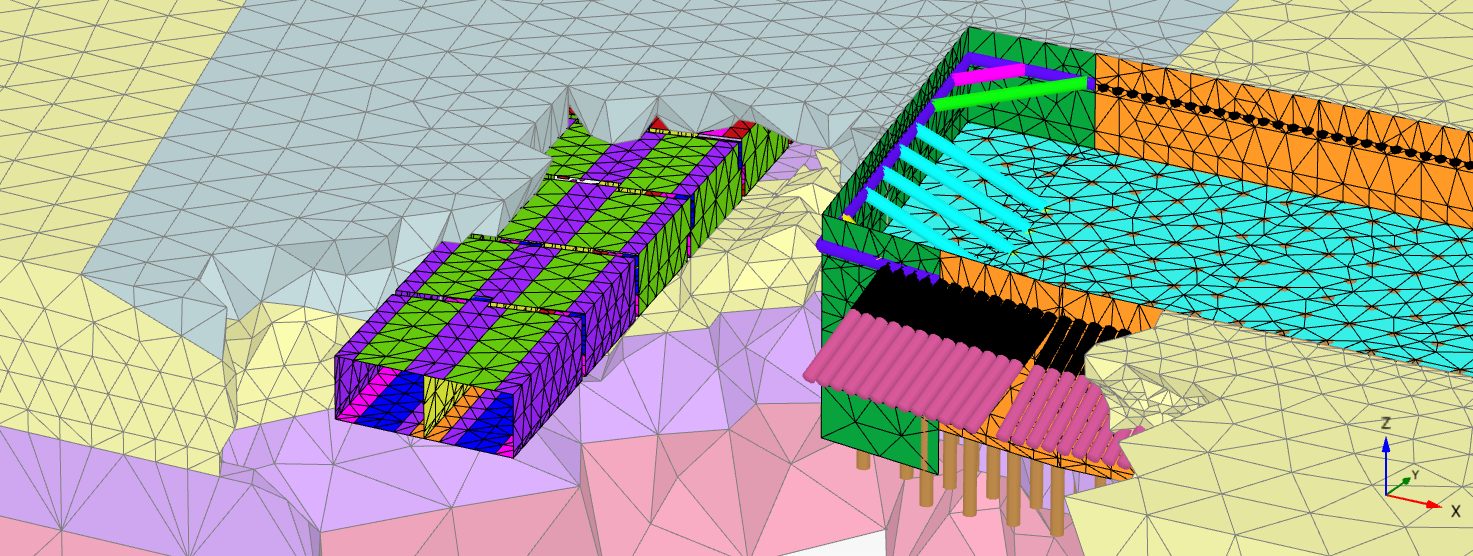
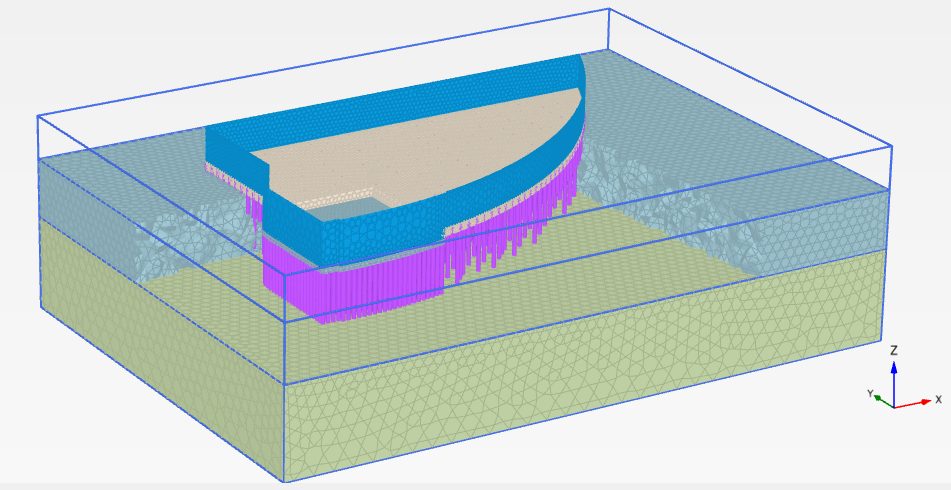
3D finite element model of a piled-raft foundation with diaphragm walls

Finite Element model of a piled-raft foundation and retaining structure.

About Us

Tailored geotechnical consulting

Welcome to Ur-GeoTech. We apply state-of-the-art Finite Element Analysis in Geotechnical Engineering.
Ur-GeoTech offers tailored geotechnical consulting services to match the requirements of our client's project. Collaboration with geotechnical engineering consultancies, in the form of a consulting partnership on a sub-consultancy basis, is at the core of our services.

We have more than 35 years of experience in the field of geotechnical and tunnel engineering, leading design teams providing world-class solutions for challenging and prestigious projects in Europe, the United Kingdom, the Middle East and Australia. Our experience and academic qualifications enable us to enhance the technical capability of our clients' design teams, ensuring useful finite element analysis for complex geotechnical problems.

The availability of high-speed computers and finite element software enables geotechnical engineers to deal with rather complex soil-structure interaction analysis. Reliable optimum design analysis can only be achieved as long as there is adequate training on how to perform these analyses. Performing useful geotechnical finite element analysis requires knowledge of the principles of soil mechanics, the basic concepts of the finite element method, the constitutive soil models and the software used for the analysis.

We provide our expertise for enhancing the technical capability of geotechnical design teams to deal with complex soil-structure interaction problems and to ensure obtaining useful solutions. We are confident that our technical training and support can help our clients anticipate issues before they become expensive and time-consuming, and avoid delays and lapses.

Our expertise supports our clients in producing the highest quality of geotechnical design works on time and within the assigned budget.

01 — OUR MISSION

Our Mission

Ur-GeoTech is committed to providing cost-effective, value engineering and the highest professional consulting services in the field of applications of the Finite Element Method in Geotechnical Engineering. We have a solid reputation for finding the best feasible solutions for complex soil-structure interaction problems.
02 — SAVING MONEY & TIME

Saving Money & Time

Money spent by our clients is an investment. Our ethical commitment entails doing all the necessary steps to avoid overly-conservative recommendations. Our technical support and training help clients anticipate issues before they become expensive and time-consuming, and avoid delays and lapses.

03 — QUALITY

Quality

We apply state-of-the-art technology and ensure projects are implemented to the highest standard of quality, satisfying the relevant codes of practice and international standards. We provide designers with the knowledge needed to be aware of the potential restrictions and pitfalls involved in the analysis.

Services

Practical solutions to the most complex challenges

Ur-GeoTech offers an extensive range of skills and professional services in the field of geotechnical engineering. Our strength lies in the breadth and depth of our technical expertise. A solid theoretical background and engineering judgment, together with our intensive experience in the application of 2D and 3D Finite Element Models, enable us to provide our clients with optimum geotechnical consultancy services.

We also provide support and training on how to perform useful Finite Element Analysis: the principles of soil mechanics, concepts of the finite element method, advanced constitutive soil models and FEM-based software, so that design teams are aware of the potential restrictions and pitfalls involved in the analysis.

Our services include design analysis of

01

Shallow and Deep Foundations

02

Piled-Raft Foundations, assessing vertical spring stiffness of piles

03

Soil-Structure Interaction Analysis

04

Retaining Structures & Deep Excavations

05

Deep Shafts and Underground Structures

06

Tunnels (TBM & NATM) & Micro Tunnelling

07

Impact of engineering activities, such as deep excavations, on existing adjacent structures

08

Earth Embankments of Railways & Highways

09

Stability & Settlement Analysis

10

Soil Improvement Techniques

11

Geotechnical Forensic Investigation & Root Cause Analysis

12

Independent Geotechnical Design Review (Second Opinion)

Applications of the Finite Element Method

The core of our consultancy services

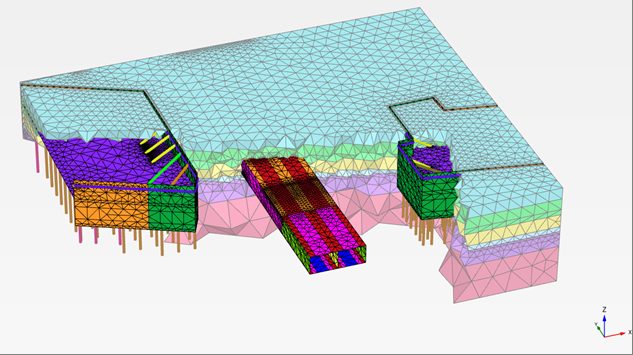
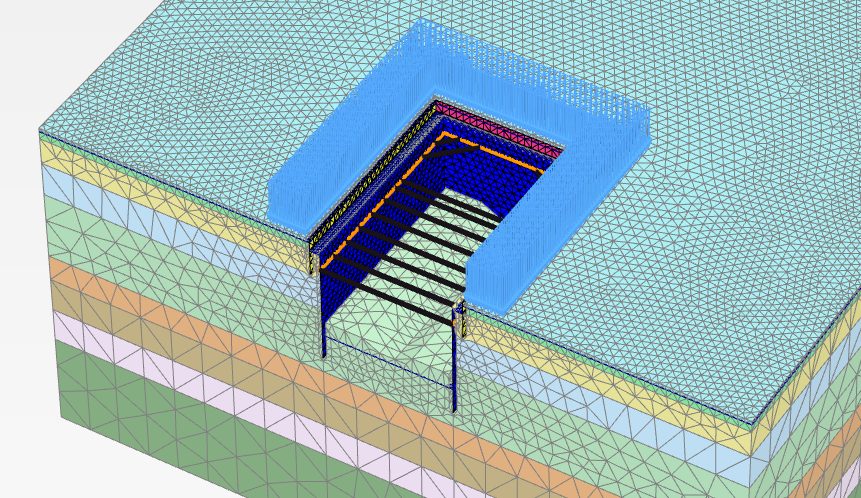
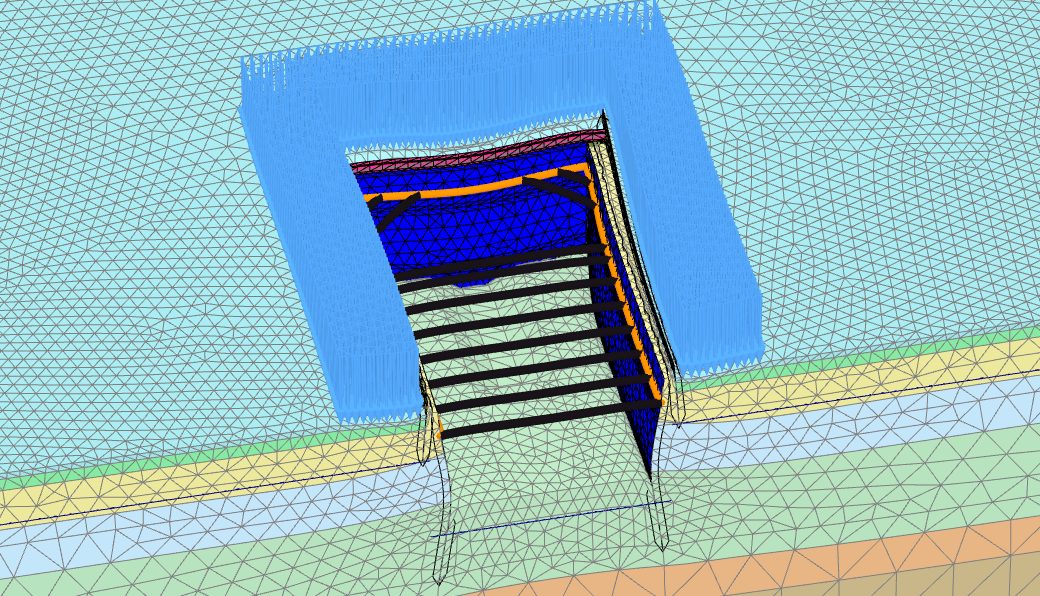
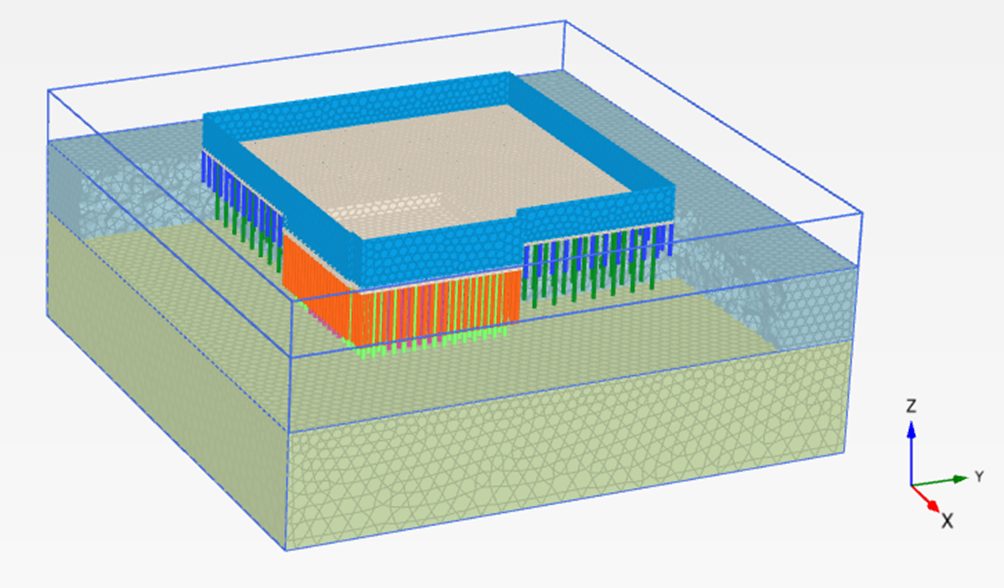
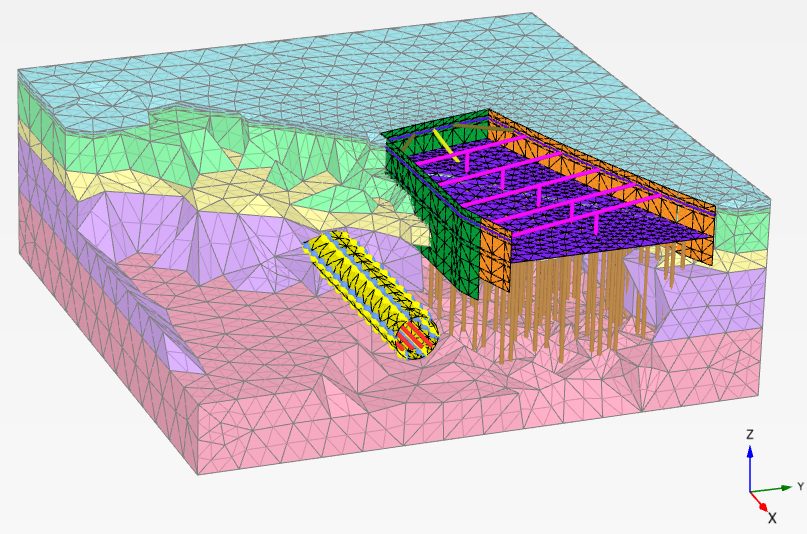
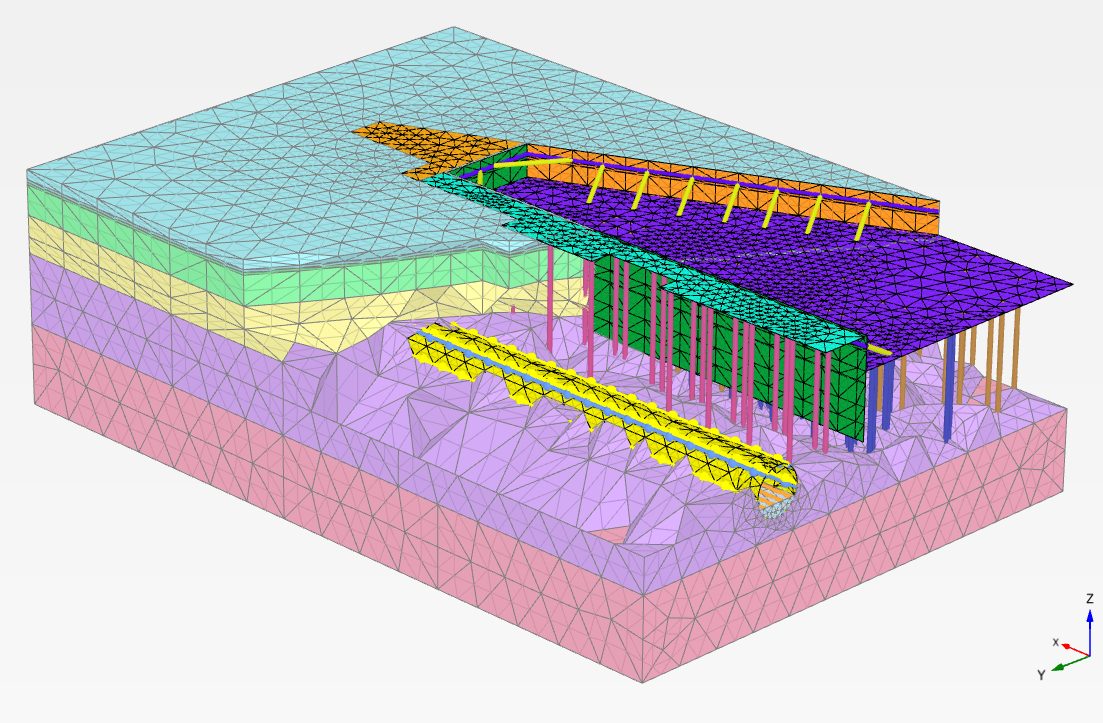
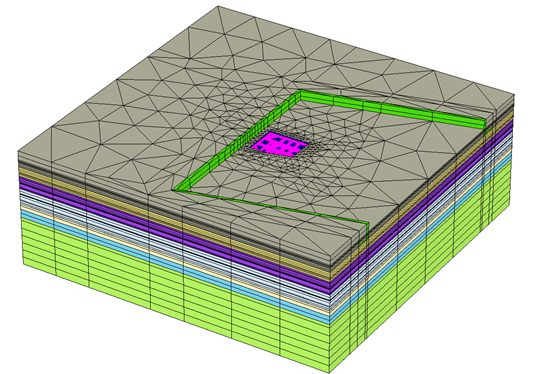
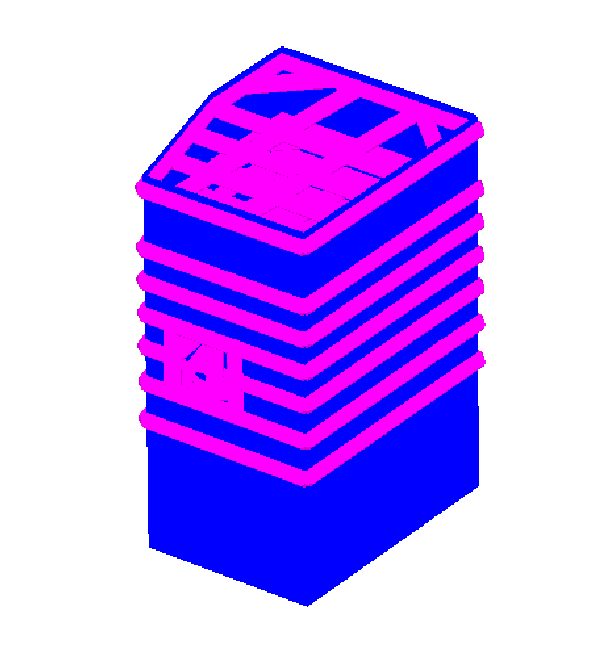
A selection of 2D and 3D Finite Element models from our work: deep excavations, shafts, tunnels, piled-raft foundations and the impact of construction on existing structures. Click an image to enlarge.

Our Name · Ziggurat of Ur

The place of the first geotechnical applications on the planet
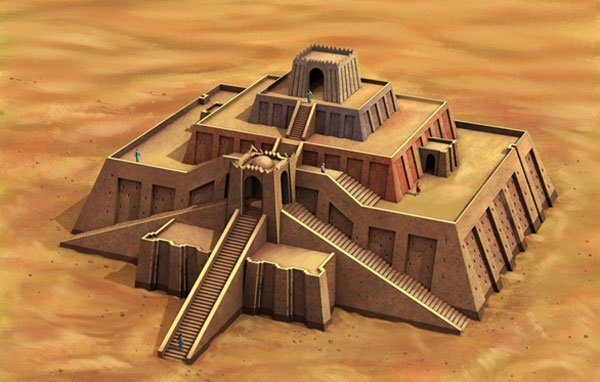
The first geotechnical applications of earth reinforcement can be found at the Ziggurats in ancient Mesopotamia (Iraq). Large religious towers called ziggurats were built by the Sumerians, Babylonians and Assyrians about 4,500 years ago. Ancient civilizations used native materials such as straw, tree branches and plant material to reinforce the earth for centuries.

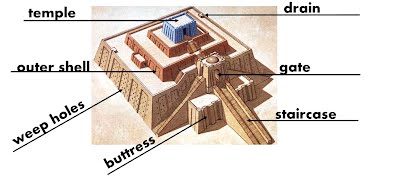
The ziggurats had walls with buttresses (almost vertical, sloped inwards at a sharp angle) faced with clay bricks in an asphalt mortar, with sun-dried bricks behind. Layers of reed matting were laid as horizontal reinforcing sheets. They used reed mats to stabilise the foundations and the brick walls, as they already understood that both brickwork and soil have nearly no tensile strength, and that reinforcement elements were needed to induce tensile forces into their constructions for stabilisation.

The ziggurats were massive pyramid-like structures in the form of terraced steps of successively receding levels. They were constructed of clay bricks varying in thickness between 13 and 40 cm, reinforced with woven reed mats laid horizontally on a layer of sand and gravel at vertical spacings varying between 50 and 200 cm.

Reconstruction of the Great Ziggurat of Ur

Ziggurat of Ur in Mesopotamia (Iraq), about 2500 B.C.

One of the best-known ziggurats is the Great Ziggurat of Ur, constructed in three layers with the temple built on the top layer:

Lower layer≈ 15 m high
≈ 60 × 45 m
Second layer≈ 6 m high
≈ 35 × 25 m
Third layer≈ 3 m high
≈ 20 × 10 m
Diagram of a ziggurat: temple, outer shell, buttress, weep holes, staircase, gate and drain
Dr Mazin Alhamrany
35+years of professional & academic experience
PhDGeotechnical Engineering / Numerical Analysis, The University of Sheffield
Who We Are

Dr Mazin Alhamrany

BSc · MSc · PhD · CEng · MICE · MIEAust · CPEng · NER · RPEV

Dr Mazin Alhamrany is an internationally recognised Chartered Geotechnical Engineer with over 35 years of professional and academic experience spanning the United Kingdom, Europe, the Middle East and Australia.

Dr Mazin is widely regarded for his expertise in advanced numerical modelling, soil-structure interaction and underground infrastructure, having led the geotechnical design of several iconic mega-projects such as the Amsterdam Metro North-South Line and High-Speed Rail Amsterdam-Paris (Europe), East London Line (Dalston Station), Tottenham Court Road Station Upgrade and the Crossrail Project (UK), and Doha Metro, Riyadh Metro, Mega Reservoirs, Lusail Plaza Towers (Four Towers) and Etihad Rail (Middle East).

In Australia, he continues to lead complex infrastructure design and impact assessment projects using state-of-the-art 3D modelling tools such as PLAXIS. Dr Mazin has also made substantial contributions to research and knowledge transfer in his field, having published multiple technical papers on finite element modelling and geotechnical analysis, and conducted postgraduate training under world-renowned professors.

His blend of advanced analytical capability, teaching background and global project leadership clearly distinguishes him as a geotechnical expert of national and international eminence.

Academic qualifications

  • 1983 – 1986Ph.D. Geotechnical Engineering / Numerical AnalysisDept. of Civil and Structural Engineering, The University of Sheffield, England
  • 1979 – 1980M.Sc. Civil Engineering; Advanced Soil MechanicsDept. of Civil Engineering, University of Baghdad, Iraq
  • 1968 – 1972B.Sc. Civil EngineeringCollege of Engineering, University of Basra, Iraq

Professional memberships

MIEAust · Engineers Australia CPEng, NER, IntPE · Engineers Australia BGA · British Geotechnical Association CEng · Engineering Council, UK MICE · Institution of Civil Engineers, UK ISSMGE · Int. Society for Soil Mechanics & Geotechnical Engineering CROW · Transport & Public Space platform, NL CUR · Centre for Civil Engineering Research and Codes, NL
Experience

Challenging and prestigious projects

Selected projects in which we led or delivered the geotechnical design analysis.

3D model of Crossrail Farringdon Station shafts and ticket hall
London, UK

Crossrail Project (Farringdon Station)

Farringdon Station is one of the major central stations and involves the construction of two 400 m long platform tunnels and associated cross passages, with a ticket hall at either end. The West Ticket Hall (WTH), which houses both Thameslink and Crossrail services, includes a 15 m diameter circular shaft, a 24 m × 28 m rectangular shaft, a 9 m × 25 m escalator shaft, and individual 1.2 m and 2.1 m diameter piles to support the ticket hall and over-site development.

The design of diaphragm walls, secant pile walls and deep excavations was part of the works, together with a thorough investigation, using 2D and 3D finite element models, of the impact of constructing the deep shafts on existing buildings in the surrounding area.

Blackfriars Railway Bridge, London
London, UK

Blackfriars Bridge

Assessing the impact of the construction of a new concrete box structure on the existing South Abutment of Blackfriars Bridge using a 3D Finite Element Model. The problem was complex, involving a piled-raft foundation for the proposed structure, as part of the structure is founded on the existing abutment of the bridge.

3D model of Tottenham Court Road station upgradeTottenham Court Road deep excavation on site
London, UK

Tottenham Court Road Station Upgrade

2D and 3D Finite Element Analyses were carried out for the design of the double basement and deep shafts, and for assessing the impact of construction on the existing tunnels and London Underground assets. A key challenge was the need to limit deflections in the secant pile walls in order to avoid damage to adjacent buildings and roads.

Dalston Junction excavationDalston Junction construction site
London, UK

East London Line – Dalston Junction

Foundation design for Dalston, Hoxton and Shoreditch Stations of the East London Line. The design analysis included assessing the impact of constructing the Dalston foundation on existing listed buildings, as well as the impact of Dalston station as a whole on the proposed future Crossrail tunnel.

UK

Gerrard's Cross

Geotechnical team leader for the independent checking of the design of the anchored contiguous pile walls installed on both sides of the existing tunnel. Advanced modelling was required to assess the stability of the anchored contiguous piles, their deflections, and the bending moments and shear forces.

London, UK

Thameslink Borough Viaduct

Responsible for assessing the impact of the construction of the Borough Viaduct on the existing Northern and Jubilee line tunnels. The work also included the impact of moving loads on existing buried services and LUL assets.

Edinburgh, UK

Haymarket Rail Tunnels

Responsible for assessing the effects of constructing a new development on two existing Victorian brick-lined tunnels in Edinburgh. Complex Finite Element Analysis was carried out to predict stresses and displacements in the existing tunnel linings during each construction phase and after completion of the permanent works.

High Speed Line track in the Netherlands
The Netherlands

High Speed Line (HSL) Amsterdam–Paris

High Speed Line South, one of the largest European rail projects of recent times, provided the Netherlands with a 300 km/h railway from Amsterdam southward to the Belgian border, a distance of 125 km.

The strict requirements regarding maximum allowable long-term settlement, including secondary compression in the highly compressible organic soils of the Netherlands, made the design process a real challenge. The design works included tunnelling (Rotterdam Tunnel), deep excavations and retaining structures.

Sandwich wall construction beneath Amsterdam Central Station
Amsterdam, NL

North-South Metro Line Amsterdam

Beneath Amsterdam Central Station an excavation 18 m wide and 23 m deep was created along the whole length of the station for the proposed immersed tunnel. The design applied an innovative 'sandwich wall': a composite wall of two rows of steel piles with a body of jet grout columns in between, acting both as an excavation retaining wall and as a vertical bearing wall.

Finite Element Analysis predicted the anticipated settlements, deformations and stresses in the walls, demonstrating that the works would not damage the historic station building.

River dike with road on top along the river
Waal & Maas rivers, NL

Dikes Improvement

Improving and reinforcing existing embankments and designing new dikes along the Waal and Maas rivers. The rate of construction is specified to ensure reasonable safety factors for stability; pore water pressure build-up during construction and the time required for its dissipation are calculated. At many sites, due to limited construction time, geotextiles and/or soil improvement are applied to increase shear strength against sliding.

Iraq

Umm Qasr, Iraq

13 Berths in Umm Qasr

The study focused on (i) whether sand drains were needed to accelerate consolidation and reduce the time required for consolidation settlement, (ii) whether soil improvement was needed to improve the allowable bearing capacity, and (iii) how long preloading should be applied to eliminate all primary consolidation settlement under the permanent loading, plus enough secondary compression to reduce post-construction settlement to tolerable values.

Babylon, Iraq

Babylon Project

Predicting the behaviour of three 30 m high earth-fill "mountains" in the ancient city of Babylon. Stability and settlement were thoroughly investigated, as was the influence of these constructions on the adjacent ruins. Inclinometers were recommended to monitor lateral displacements during construction; the readings were very close to the values predicted by finite element analysis.

Qatar

Doha, Qatar

Doha Metro

Geotechnical design team leader responsible for geotechnical services for the two packages forming the core of the Doha Metro in the old part of the city. The Red Line South runs from the Musheireb development south along Al Matar Road to E-Ring Road; the Gold Line starts at Airport City North Station, a double-width station, and runs west to the Musheireb development.

Finite element model of tunnel-shaft junction
Doha, Qatar

Abu Hamour Drainage Tunnel

Geotechnical Director for the tender design of a storm water tunnel and associated access shafts. TBM segmental lining (main tunnel) and pipe jacking with micro-tunnelling (connection tunnels) comprise the tunnel works. Work included feasibility studies, advanced numerical analysis (Strand7) of main tunnel–shaft junctions, technical design reports and tender drawings.

Bahrain · Saudi Arabia

Muharraq, Bahrain

Muharraq STP & Flow Conveyance

Geotechnical Technical Manager for the design and build of the Muharraq STP and Flow Conveyance project: a new Deep Gravity Sewer (DGS), 97 shafts and a Waste Water Connection Network (WWCN) of approximately 16 km, collecting flows from the island of Muharraq and future developments on new land reclamation off the east coast of Bahrain.

Riyadh, KSA

Riyadh Metro

A six-line driverless network eventually encompassing 177 km and 96 stations in the Saudi capital. Responsible for leading the design team for the geotechnical and tunnel design of the tunnels and the stations, subdivided into Shallow, Deep and Transfer Stations.

United Arab Emirates

Etihad Rail freight train crossing desert dunes
UAE

Etihad Rail

Etihad Rail's 1,200 km network extends across the United Arab Emirates from the border of Saudi Arabia to the border of Oman, running from Ghweifat to Abu Dhabi, Dubai and the Northern Emirates, with major connecting points including Al Ain and Madinat Zayed. The network includes freight terminals, distribution centres and depots close to major transport hubs such as Mussafah, Khalifa Port, Jebel Ali Free Zone, Port of Fujairah and Saqr Port, and will connect with the GCC network.

Responsible for leading the design team for the geotechnical works associated with this project.

Let's work together

Complex soil-structure interaction problem?

Thank you for your interest in Ur-GeoTech. Please contact us if you have any questions or need additional information regarding our services.

Contact Ur-GeoTech →
Contact

Registered in Holland · Available worldwide

We support geotechnical design teams in Europe, the United Kingdom, the Middle East and Australia, on a project or sub-consultancy basis.

Get in touch